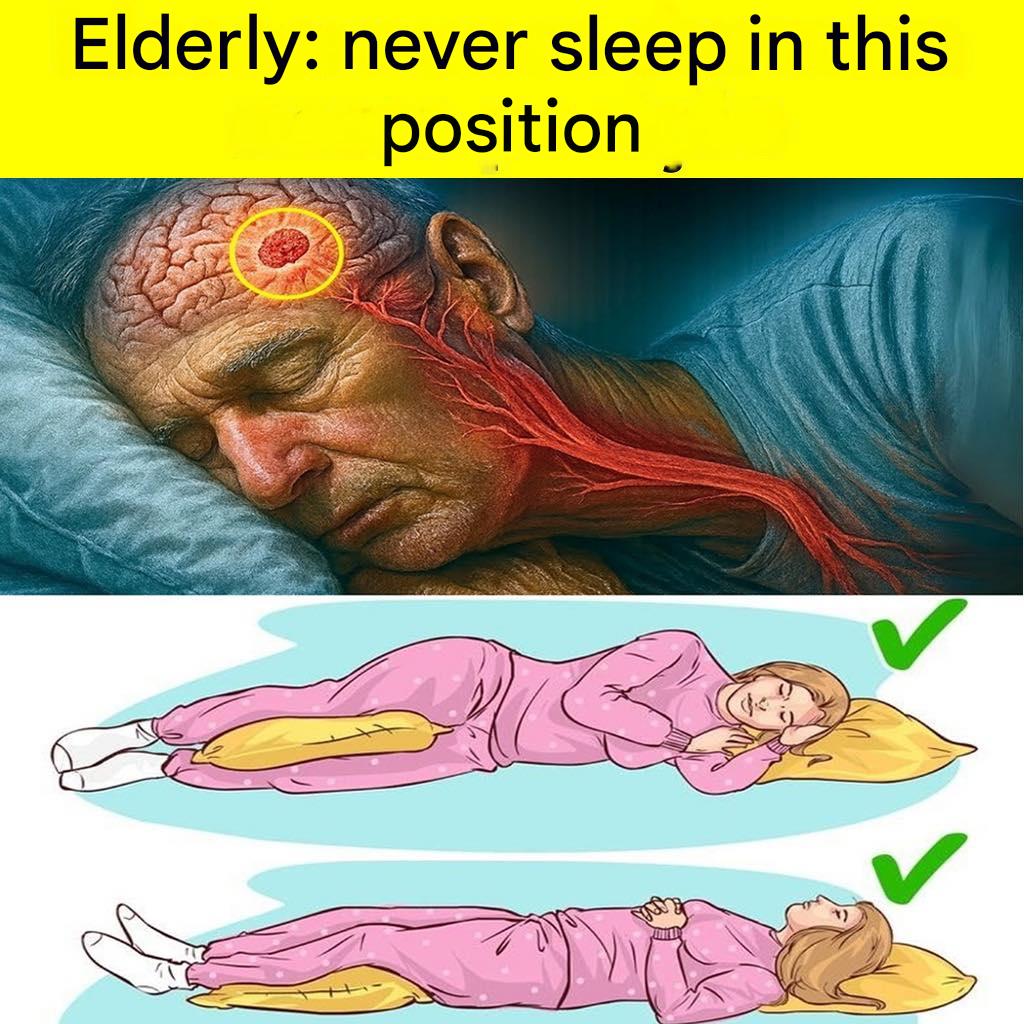
As we grow older, the little things that affect how we sleep can quietly shape our health in profound ways. For many in their 60s and beyond, waking up with neck soreness, heavy legs, or just that foggy fatigue isn’t always about a bad mattress—it might just be about how we sleep.
Lying flat on your back often feels easy and even supportive for your spine. But over time, that position can subtly compress blood flow in your neck, making circulation less efficient. For some older adults, this could slightly reduce the oxygen reaching the brain or heart. While every now and then is fine, relying only on a back-sleeping posture year after year may carry more risk than we think.
A gentler path to better rest? Try shifting gently onto your left side. This little change can help your circulation work more smoothly, ease the heart’s nightly workload, and even support digestion. To make it cozy, tuck a soft pillow between your knees — that helps keep your hips aligned — and another under your legs if it feels more relaxing.
But good sleep isn’t just about position. Simple habits go a long way: choose a pillow that cradles your neck with comfort, elevate your upper body a bit if reflux or circulation is a concern, and avoid heavy meals, alcohol, or caffeine before bed. A gentle evening routine—light stretching, deep breathing, or a calming walk—can prepare your body for deep, healing rest. Aim for about 7–8 hours of uninterrupted sleep, if you can.
More than just a comfort issue, how we sleep touches our whole well-being. By favoring side sleeping (especially on the left), and pairing that with thoughtful habits, you’re helping your body stay nurtured, your heart less burdened, and your mind sharper. Today’s small choices shape tomorrow’s health—and sometimes, one gentle shift in your nightly posture can make all the difference.