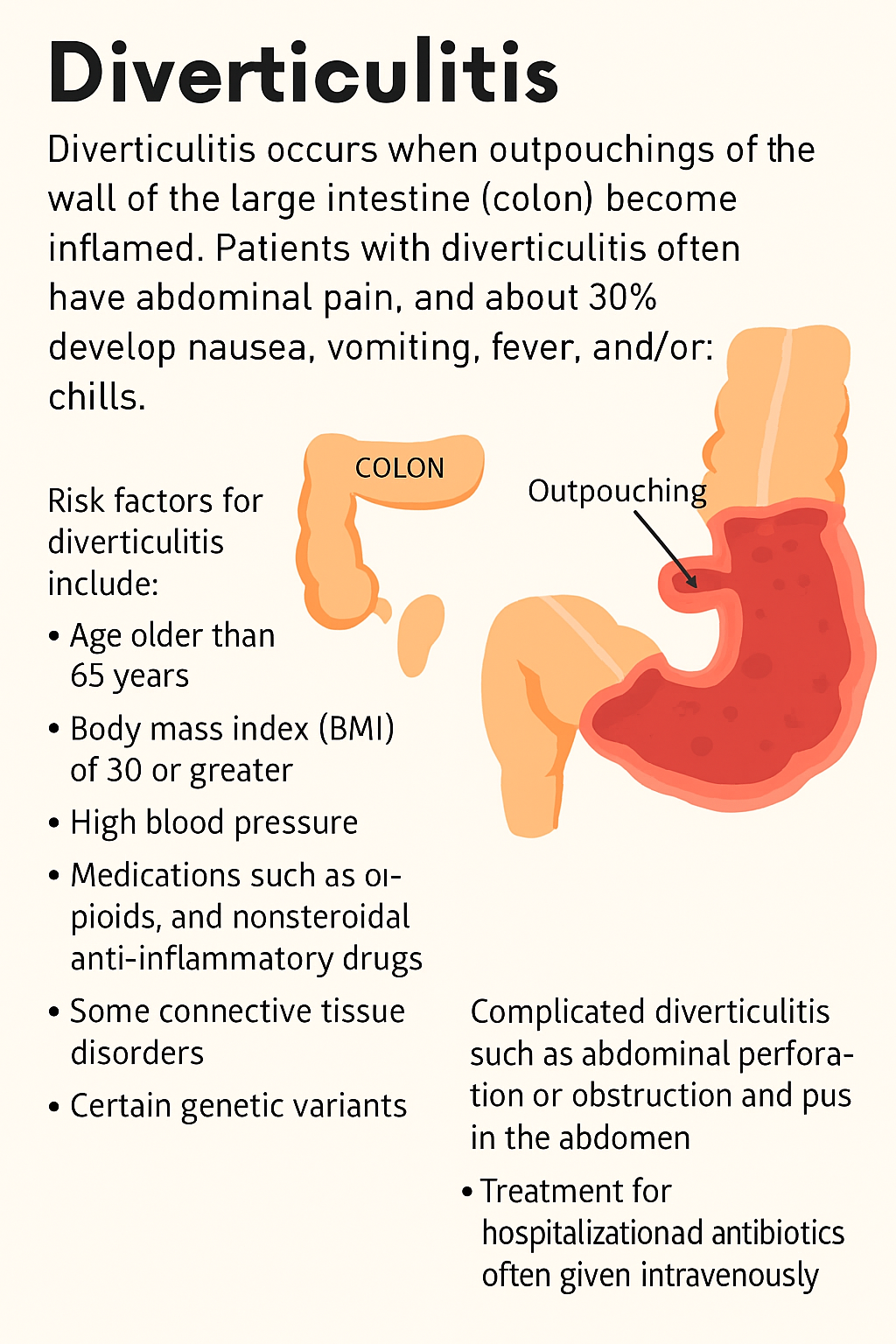
Diverticulitis is a condition that occurs when small pouch-like bulges—called diverticula—form in the wall of the large intestine (colon) and become inflamed or infected. While many people may have diverticula without symptoms (a condition known as diverticulosis), diverticulitis happens when these pouches suffer irritation or inflammation.
Most patients experience abdominal pain as the main symptom, and around one-third may also develop nausea, vomiting, fever, or chills.
What Increases the Risk of Diverticulitis?
Several factors can raise the likelihood of developing diverticulitis, including:
- Age over 65 – Risk increases naturally with age.
- High body mass index (BMI of 30 or more) – Excess body weight can contribute to inflammation and pressure in the colon.
- High blood pressure – Linked with inflammation and digestive issues.
- Type 2 diabetes – Can weaken the immune system and slow healing.
- Use of certain medications – Especially opioids, steroids, and nonsteroidal anti-inflammatory drugs (NSAIDs).
- Connective tissue disorders – These conditions can weaken the structure of the colon wall.
- Genetic factors – Some individuals may inherit a predisposition to developing diverticular disease.
Uncomplicated vs. Complicated Diverticulitis
There are two main forms of diverticulitis, and understanding the difference is important for proper treatment.
Uncomplicated Diverticulitis
This is the more common and less severe form. It involves inflammation in a localized area of the colon without spreading infection.
Recommended treatment may include:
- Acetaminophen for abdominal discomfort
- Clear-liquid diet for 1–2 days to allow the colon to rest
- Oral antibiotics only for individuals with fever, older adults (over 80), people who are pregnant, immunocompromised, or those with chronic medical conditions
Most cases of uncomplicated diverticulitis improve within a few days with simple home-based care.
Complicated Diverticulitis
This more serious form occurs when inflammation leads to additional problems such as:
- Abscess formation (pus collection in the abdomen)
- Colon obstruction
- Perforation (tear) in the colon wall
Treatment for complicated diverticulitis typically includes:
- Hospitalization and intravenous antibiotics
- Drainage of pus if an abscess is present
- Surgery to remove a damaged part of the colon in severe or recurrent cases
Prompt medical attention is crucial to prevent further complications.
Conclusion
Diverticulitis is a common digestive condition that can range from mild to severe. Early recognition of symptoms and understanding personal risk factors can help individuals seek timely medical care. With proper treatment—whether at home for mild cases or in the hospital for more serious ones—most people recover fully.
If you or someone you know experiences persistent abdominal pain, fever, or digestive discomfort, it’s important to consult a healthcare professional for proper evaluation and management.