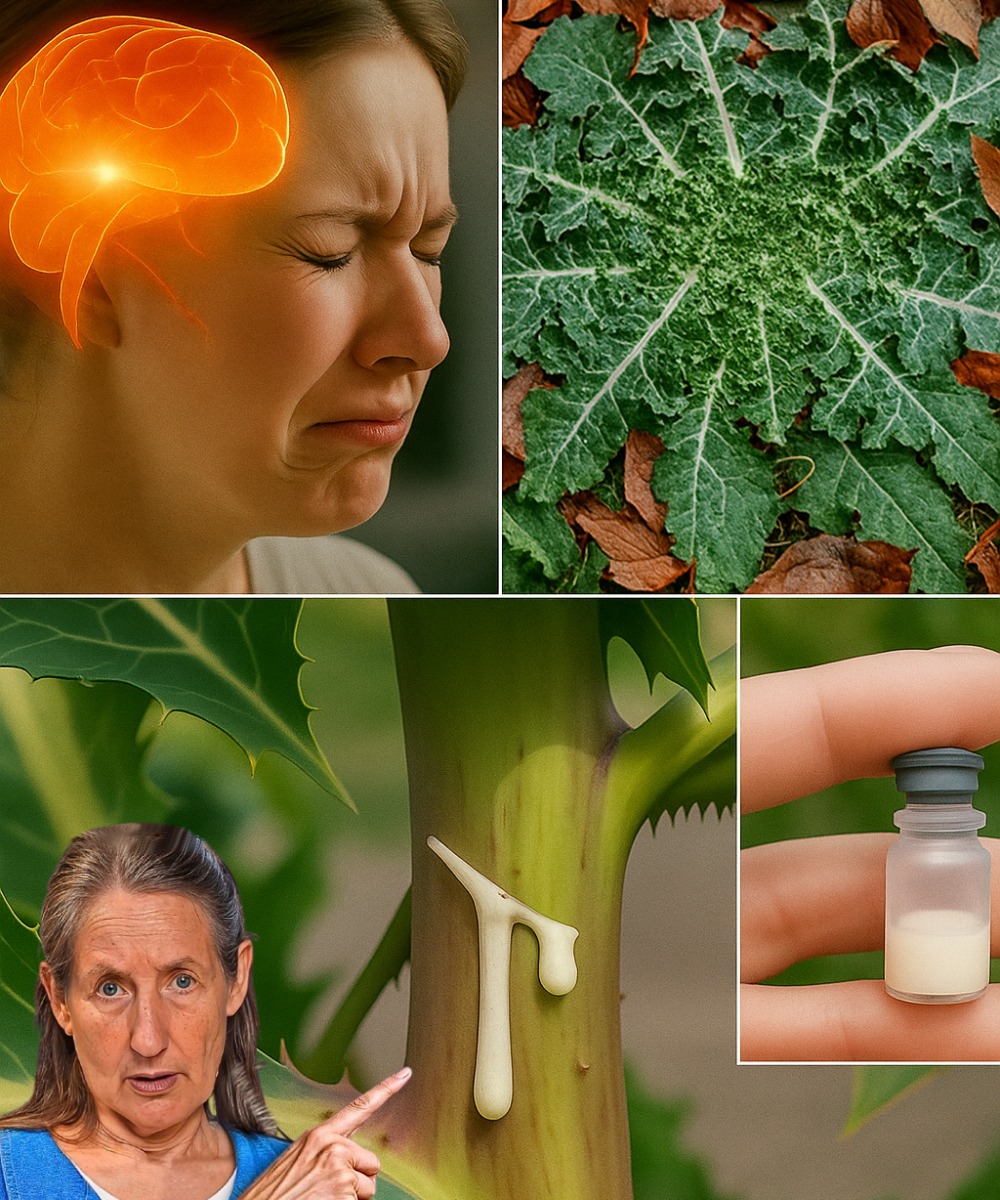
Have you ever found yourself awake in the early hours, joints aching, mind restless, longing for a gentle way to ease the tension? Imagine stepping outside and discovering that relief could be whispering right there in the wild—yes, even in that overlooked plant growing at your yard’s edge. There’s a humble ally known as wild lettuce (Lactuca virosa) that many traditional herbalists once referred to as the “poor man’s opium,” not because it’s dramatic or intense, but because it offers a quiet, calming support for discomfort and unrest.
This plant has a soft legacy. Long ago, healers noticed its milky sap — called lactucarium — and used it when other options failed. The sap carries compounds like lactucin and lactucopicrin (studies in animals suggest these may support pain relief and sedation) . I love this idea: relief that isn’t about masking your body, but about reconnecting with nature’s rhythms. Instead of reaching for yet another pill that blunts everything, you’re engaging with a plant that invites you to slow down, be present, and listen.
Think of the ways this plant might help in everyday life:
- After a long day, when your knees or back protest, imagine gently harvesting a leaf (with care), taking in that sap and applying it in a simple ointment or infusion to ease the edge of the ache.
- When sleep feels elusive and your thoughts keep circling, a mild brew of wild lettuce can become a ritual: warm cup, soft breath, body relaxing.
- Or when your lungs feel tight, or your nightly cough won’t let you rest, the herb’s antispasmodic tradition offers a peaceful option.
It’s not about replacing care or medicine but about adding a thoughtful option—one rooted in earth, slow and kind.
If you’re curious about trying this, here are a few gentle steps to consider:
- Find it in a clean spot (away from road spray or chemicals) — wild lettuce grows in sunny open ground or among disturbed soil.
- Harvest mindfully: wear gloves (the sap can irritate sensitive skin), pick leaves or stems at the right time (when the sap is milky).
- Use simply: perhaps a warm infusion in the evening or a small sap-oil applied to a sore area.
- Slow and cautious is the best approach: because—while there are promising indications—the scientific evidence in humans is limited, and overuse or misidentification carry risks (there have been reports of adverse reactions)
- If you’re pregnant, on medications (especially sedatives or pain-killers), or have chronic illness, check in with your trusted healthcare provider.
In the end, what I love about this story is the invitation it gives you: you don’t have to wait for the perfect pill or high-tech fix. You can step outside, look down at a common wild plant, and remember that your body—and your spirit—deserves allies that come softly, respectfully, and with a whisper of wilderness. Because healing doesn’t always roar—it can also rustle. 🍃
If this resonates, and if you feel called to explore this slower path, I’d love to know: What’s one gentle first step you could take today toward connecting with nature’s quiet medicine?